+251 115-527202 email: info@eipa.gov.et eServices
WIPO Director General Opens International Conference in EthiopiaDraft Law Presented at International Geographical Indications Conference

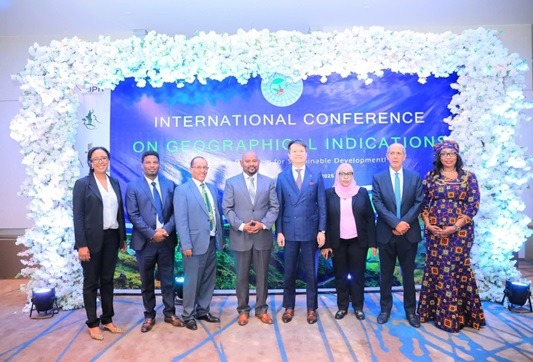
The International Conference on the Protection of Geographical Indications (GIs) opened today at the Skylight Hotel in Addis Ababa. The Director General of the World Intellectual Property Organization (WIPO), Daren Tang, officially inaugurated the conference.
Ato Woldu Yimessel, Director General of the Authority, delivered a welcome address, noting that Ethiopia is endowed with diverse climates, landscapes, and agricultural products, which have led to the production of unique and renowned goods. He highlighted that products such as coffee, teff, honey, fruits, and various spices are exposed to rights violations in global markets due to the lack of an adequate protection system. He emphasized that the conference, featuring experiences from various countries on GI product protection, would provide valuable insights.
WIPO Director General Daren Tang stressed that intellectual property protection is crucial for manufacturing, trade, and technological advancement and it should be accessible to all segments of society to support and encourage youth and entrepreneurs. He noted that intellectual property encompasses not only technology and industry but also culture and heritage. The protection of GI products is vital for preserving community knowledge and culture for future generations and enabling communities to benefit commercially from the sector.
The Minister of Innovation and Technology, Dr. Belete Molla, stated that Daren Tang’s visit to Ethiopia and participation in the conference demonstrate WIPO’s continued support for Ethiopia and its commitment to making intellectual property a foundation for development in Africa. He explained that GI protection goes beyond a legal tool, enabling farmers, producers, and communities to safeguard their distinctive products—renowned due to their geographical origins—ensure equitable market access, and preserve cultural heritage.
Today’s conference session featured presentations on GI product protection experiences from China, the United Kingdom, and other international institutions. On the final day of the conference tomorrow, Ethiopia’s draft law on GI product protection will be presented for discussion.
Various Ethiopian agricultural and artisanal products, representing the country’s identity, were showcased for visitors.
Intellectual Property and the Media
On June 06, 2025, the Authority conducted an awareness-raising training session in Bishoftu city for journalists and editors from various media outlets. The training aimed to enhance the role of the media in raising awareness about intellectual property protection.
In his opening remarks, Deputy Director General Mr. Endalu Mosissa stated that the intellectual property system recognizes the value of human intellectual output for societal transformation and national development. He emphasized that intellectual property serves as a tool for achieving technological, social, and economic progress, and highlighted the critical role of the media in disseminating information about the Authority’s services, international engagements, and agendas to the public. He stressed the importance of raising awareness among journalists and editors and engaging in discussions to achieve this goal.
Key topics covered by the executives included the patent system in Ethiopia, the significance and economic benefits of trademarks, the main aspects of copyright and related rights protection, the importance and benefits of protecting traditional knowledge and geographical indications, and the relationship between intellectual property and the media.
Discussions also addressed anticipated collaborative efforts with other stakeholders in intellectual property protection and technology transfer, opportunities for promoting and encouraging innovation, issues related to trademark rights violations in foreign trade, and the protection system for geographical indication products. Participants provided feedback, emphasizing the need for close collaboration with media, universities, and research institutions, as well as adopting modern approaches to promotional activities.